
Practical Information for Aruba Visitors
- Home
- Aruba Travel Guide
- Practical Information for Aruba Visitors
Practical Information for Aruba Visitors
Whether you’re visiting Aruba for a relaxing beach holiday, an adventure-filled getaway, or a business trip, knowing a few practical details before you arrive can make your stay smoother and more enjoyable.
This guide brings together the essential information every visitor should know from staying safe and connected to understanding local currency, electricity, healthcare, and emergency services. Use this page as your quick-reference hub during your trip and explore the detailed guides below for more information.
What You'll Find in This Guide
Before travelling, it’s helpful to understand how everyday services work in Aruba. While the island is known for its welcoming atmosphere, modern infrastructure, and visitor-friendly environment, knowing where to find reliable information can save time and provide peace of mind.
This Practical Information section covers:
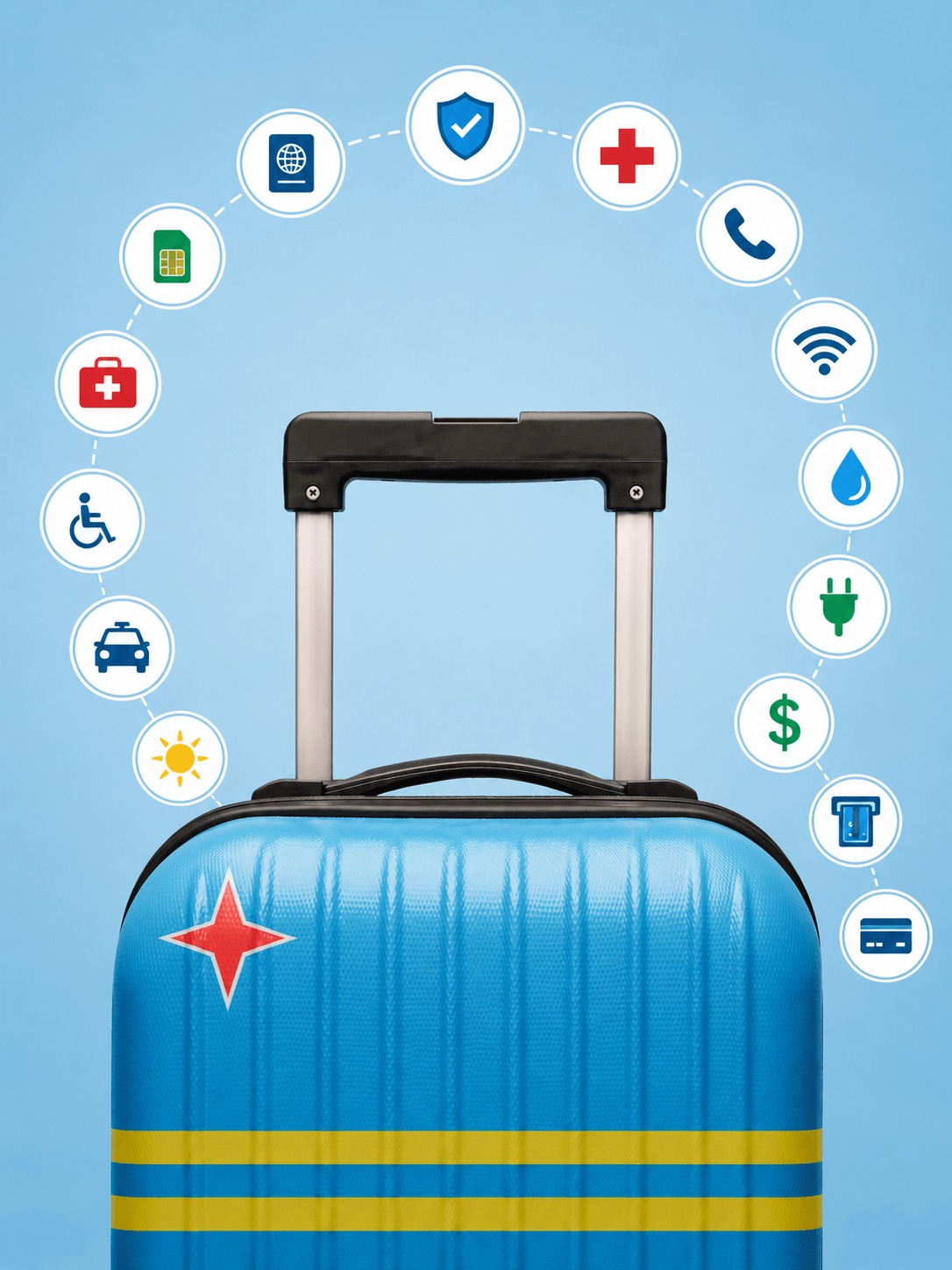
- Safety and emergency contacts
- Healthcare and pharmacies
- Drinking water quality
- Electricity and plug types
- Internet access and mobile connectivity
- Money, ATMs and credit cards
- Tipping customs
- Taxes and visitor fees
- Accessibility information
- Sun, heat and mosquito advice
Practical Information Guides
Is Aruba Safe?
Aruba is widely recognised as one of the safest destinations in the Caribbean, but visitors should still take sensible precautions. Learn about personal safety, beach awareness, road safety, emergency assistance, and practical travel tips for a worry-free holiday.
Aruba Emergency Numbers
Save important emergency contacts before your trip. This guide lists verified numbers for police, ambulance, fire services, hospitals, coast guard, and other useful emergency resources that visitors may need.
Healthcare, Hospitals and Pharmacies
If you need medical assistance during your stay, Aruba offers modern healthcare facilities, pharmacies, and medical clinics. Learn where visitors can seek treatment and what to expect.
Accessible Travel in Aruba
Many attractions, beaches, hotels, and transportation providers offer facilities designed for travellers with mobility needs. Discover practical accessibility information before planning your trip.
Can You Drink the Tap Water in Aruba?
One of the most common visitor questions has a simple answer. Aruba produces high-quality drinking water through desalination, making tap water safe throughout the island.
Electricity, Voltage and Plugs
Before packing your electronics, check whether you’ll need a travel adapter. This guide explains Aruba’s electrical system, plug types, and voltage compatibility.
Internet and Wi-Fi in Aruba
Staying connected is easy in Aruba. Learn about internet access at hotels, cafés, public areas, and other common locations visitors use during their stay.
Tourist SIM Cards and Mobile Service
Need mobile data while travelling? This guide explains how visitors can purchase local SIM cards or eSIMs, where to find providers, and what to know before choosing a mobile plan.
Money, Credit Cards and ATMs
Understand how payments work in Aruba before you arrive. Learn about cash, card acceptance, ATM availability, currency exchange, and useful payment tips.
Tipping in Aruba
Wondering when and how much to tip? This guide explains common tipping practices in restaurants, hotels, taxis, tours, and other visitor services.
Taxes, Service Charges and Visitor Fees
Visitors may encounter accommodation taxes, service charges, and other tourism-related fees. This guide explains the most common charges and directs readers to official sources for current information.
Sun, Heat and Mosquito Advice
Aruba enjoys sunshine throughout the year, making sun protection especially important. Learn how to stay comfortable, hydrated, and prepared for outdoor activities.
Quick Tips Before You Go
A few simple preparations can help make your Aruba holiday more comfortable:
- Save local emergency numbers on your phone.
- Check whether your devices need a plug adapter.
- Notify your bank before international travel if necessary.
- Carry both a payment card and a small amount of cash.
- Stay hydrated and use reef-friendly sunscreen.
- Bring travel insurance that covers overseas medical care.
- Download offline maps or important travel documents before arrival.
- Popular Aruba questions
Frequently asked questions.
Quick answers to the questions visitors ask most before traveling to Aruba.
What practical information should I know before visiting Aruba?
Before travelling to Aruba, it’s helpful to understand local safety tips, emergency contacts, healthcare services, drinking water quality, electricity and plug types, internet access, mobile connectivity, currency, tipping customs, and transportation options. Planning ahead will help you enjoy a smooth and stress-free holiday.
Is Aruba easy for tourists to navigate?
Yes. Aruba is one of the Caribbean’s most visitor-friendly destinations, with modern infrastructure, clear road signage, reliable public services, and English widely spoken alongside Dutch, Papiamento, and Spanish. Most tourist areas also offer easy access to ATMs, pharmacies, restaurants, and transportation.
Can I use my credit card and U.S. dollars in Aruba?
Yes. Major credit and debit cards are widely accepted across the island, and U.S. dollars are commonly accepted by hotels, restaurants, shops, and tour operators. ATMs are also available throughout Aruba if you need local currency or cash.
Is it safe to drink tap water and use public Wi-Fi in Aruba?
Aruba’s tap water is considered safe to drink and is produced through a high-quality desalination process. Wi-Fi is available at most hotels, resorts, restaurants, cafés, and many public areas, making it easy for visitors to stay connected during their trip.
Where can I find emergency help while visiting Aruba?
In an emergency, visitors can contact Aruba’s police, ambulance, or fire services by calling the appropriate emergency numbers. Hospitals, medical clinics, and pharmacies are available across the island, and it’s a good idea to save important emergency contacts before your trip. For detailed information, visit our Aruba Emergency Numbers and Healthcare, Hospitals and Pharmacies guides.